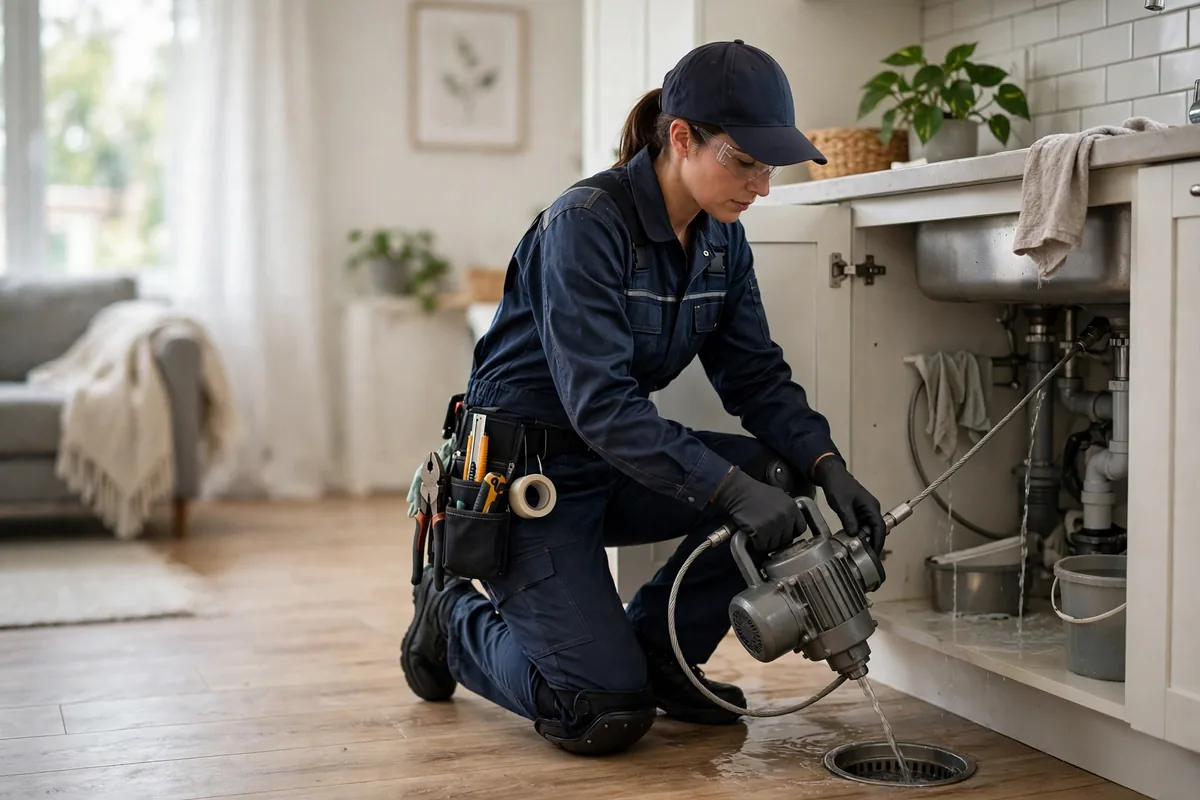
What counts as a drain emergency?
Sewage backing up, a fixture overflowing, water spreading across a floor, or several drains backing up together are reasons to call promptly about an urgent drain problem. A single slow drain, on its own, is usually less urgent. When you call, describe every affected fixture, whether sewage or clean water is involved, and how quickly the problem started.
What should I do first if a fixture overflows?
Stop flushing the affected toilet and do not run water into the affected drains, because each extra flush or tap can add more water to the problem. Keep clear of any water on the floor, and note whether other fixtures are affected. Then call and describe what happened, which fixture is involved, and whether sewage is present.
Is a single slow drain an emergency?
A single slow drain is usually not an urgent problem, especially if water is still draining and no sewage or overflow is involved. It may still need attention, but it can usually be described as a fixture problem rather than an urgent one. If the drain stops draining, or other fixtures start backing up, call promptly and describe the change.
What should I tell you when I call about an urgent drain problem?
Describe which fixtures are affected, whether sewage or clean water is involved, whether water is spreading or a fixture is overflowing, and when the problem started. Mention whether the problem came on suddenly or has been getting worse. Clear details help the person taking your call understand how urgent the problem may be, without guessing.